
Updated 20 October 2026
Skip hire and rubbish removal solve the same broad problem: getting unwanted waste off your property. The main difference is who loads it and when. A skip stays while you fill it. With rubbish removal, a crew carries and loads the agreed items during a collection visit.
The better choice depends on your job, the space outside and how much help you need. Our rubbish removal service in Dundee explains the loading and collection arrangements. This guide helps you compare it with a skip before you call for a quote.
Choose a skip when waste builds up over time
A skip can suit a home project that produces waste over several days. You can load the agreed materials as the work progresses, within the booked hire period. That is useful when removing old fittings, clearing a shed in stages or working through a garden project rather than collecting every item into one ready pile.
You need a suitable place for the container and access for the delivery lorry. You also need to be able to load safely. Think about carrying distances, steps and heavy pieces. If you are working upstairs, a skip outside does not remove the need to bring the waste down without blocking shared entrances or escape routes.
Choose rubbish removal for a ready clear-out
Rubbish removal can suit a clear-out that is ready to go. The crew loads the items agreed for collection and takes them away, so a skip does not need to remain at the property. It is also worth discussing when you need help carrying ordinary furniture or moving rubbish from an accessible room, garage or garden.
Describe where the items are, rather than saying only that you have a van-load. A few bulky pieces at ground level can be a different job from bags spread across an upper-floor flat. Tell us about stairs, narrow doors, gates, heavy items and the distance to the vehicle so the quote covers the work involved.
Compare the actual load, not just the pile
Volume matters, but weight and material matter too. Bags of garden cuttings, pieces of timber and bags of rubble can look similar from a distance while needing different handling. Identify what is inside bags and boxes. Keep liquids, batteries, gas cylinders, suspected asbestos and other restricted materials out of an ordinary mixed load.
Electrical appliances, mattresses, upholstered furniture and plasterboard need specific checks for either service. Do not assume an item is accepted because someone else has put one in a skip. Read our waste guidance and describe unusual items before booking. Specialist waste needs an appropriate arrangement; this website does not promise that every material can be collected.
Look at the space outside your home
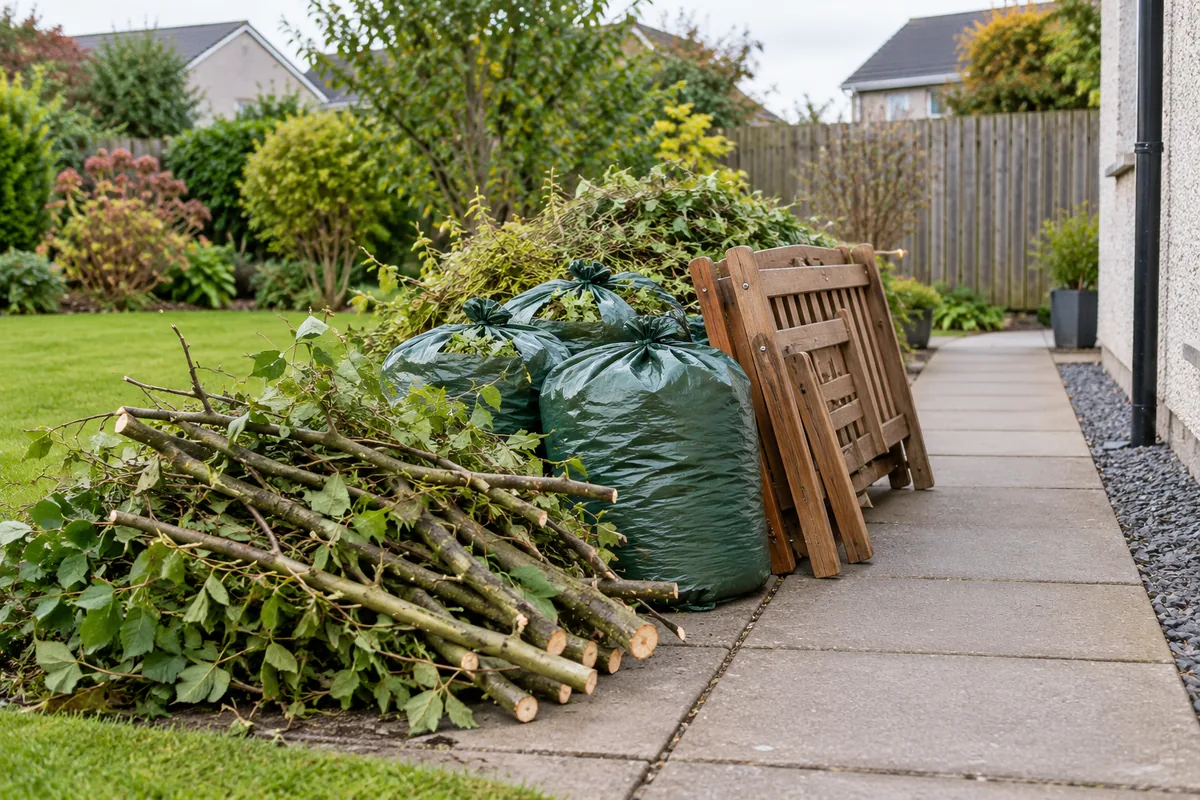
A private driveway can make skip placement simpler, provided it is suitable for the container and delivery vehicle. Check the entrance, surface and room needed to manoeuvre. The skip must not block a neighbour's access, and you should agree permission for communal or managed parking before using it.
Rubbish removal still needs a safe, lawful stopping and loading place. A collection van does not make parking restrictions disappear. If the vehicle cannot get near the property, explain the carrying route and distance in advance. Do not put rubbish onto a pavement to reserve space or leave it in a shared area without agreement.
Check whether a skip needs road permission
A skip placed on the public road needs the appropriate permission. A verge or footway may also form part of that road. In Dundee, the published council application uses Section 85 of the Roads (Scotland) Act 1984 and asks for the proposed location and dates. Permission is separate from choosing the skip size.
Nearby addresses can come under a different council. Monifieth and Carnoustie use Angus Council's process, while Newport-on-Tay and Tayport use Fife Council's. Our skip-permit guide provides the relevant links. A rubbish-removal visit does not leave a skip behind, but any stopping, parking or other permission needed for the actual collection must still be checked.
Explain indoor access and stairs
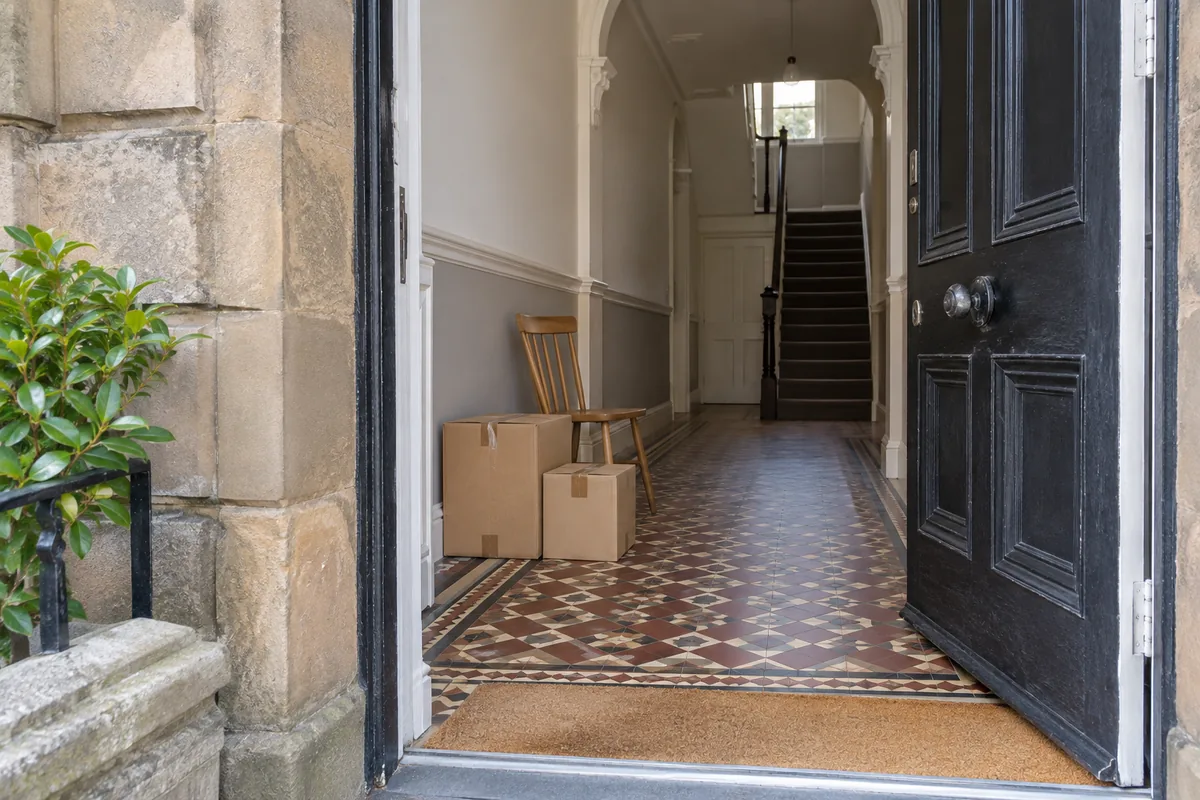
For an indoor rubbish collection, agree which rooms and items are included. Keep things that are staying clearly separate. Mention whether a wardrobe is freestanding or fitted, whether something needs dismantling and whether the crew can pass through the doorway safely. Do not assume that disconnecting appliances or removing fitted units is included.
If collection involves stairs, give the floor level and describe the layout. The crew needs a clear route and safe handling arrangements. Agree who will provide entry and confirm what can be removed. An outside collection while you are away needs a prior arrangement too; leaving a pile outside does not itself book a collection.
Compare quotes for the same work
For skip hire, compare the size, accepted waste, hire period, delivery, collection and any permit costs. For rubbish removal, compare the agreed items, loading, access and disposal arrangements. Ask what happens if there is more waste than described or the access changes. A lower price is only useful when it covers the job you actually need.
Keep your quote and booking information. Ask for the legal operator's name and relevant waste-transport or broker authorisation details, which can be checked with SEPA, the Scottish Environment Protection Agency. That record is different from a council permit for putting a skip on a road. Do not treat one as a replacement for the other.
Make the choice around your project
If you can load safely and want somewhere for waste to build up over several days, start by comparing the eight skip-size guides. Our article on choosing a skip for a Dundee home project explains volume, weight and delivery space in more detail.
If the waste is ready and you need help carrying and loading it, discuss rubbish removal. For either service, call 01382 250390 with your full postcode, item list, access details and preferred dates. Visit our Dundee skip-hire homepage for the main service choices. We will talk through the work and confirm the arrangements before you book.