
Updated 20 October 2026
A skip makes a home project easier when it matches the waste, the space outside and the way you plan to work. A kitchen refit, a garden tidy-up and a garage clearance can leave very different loads. The best starting point is a short list of what you are removing, rather than the number of rooms you are working on.
This guide explains how to narrow down your choice before you call. For the full comparison, see our skip sizes in Dundee, with approximate dimensions and bag capacities. The measurements are guides: the actual container, accepted waste and delivery access need to be confirmed for your booking.
Start with the waste you need to remove
Walk through the job and list the main materials. For a kitchen, that might mean cupboards, worktops, packaging, tiles and an old appliance. For a garden, separate branches and grass cuttings from soil, paving slabs and a dismantled shed. These materials take up space differently, and they do not all belong in the same load.
Include what is still to come. If work starts with stripping out and finishes with new flooring or fitted units, there may be packaging and offcuts at the end. A skip chosen only for the first pile can be too small for the whole job. Keep reusable items separate, and agree any different disposal arrangements before work begins.
Compare small skips and builders skips
A 2-yard mini skip is a useful starting point for a small clear-out. A 4-yard skip gives more room for a modest home or garden job. The right choice still depends on the size of the items: a bulky cupboard may take up much of a small container even when the rest of the waste looks manageable.
For renovation waste, compare 6- and 8-yard skips. These give more room for dismantled fittings and other agreed materials. Do not assume that one size always suits a bathroom or kitchen. Removing only cupboard doors is a different job from taking out a full kitchen, wall tiles and flooring. Explain the actual work when you call.
Use larger skips for bulky, lighter waste
The 10-, 12-, 14- and 16-yard guides help when you have a larger amount of light, bulky waste. Timber, packaging and some clearance items may need the extra space. High sides also affect how you load the skip, so think about whether the items can be placed inside safely from ground level.
Do not choose a large skip simply because you have a lot of soil or broken concrete. Heavy materials need an agreed weight limit and a suitable container. A small pile of rubble can weigh more than a much bigger pile of cupboards. Tell us about dense waste before selecting a size, and never assume that filling a large skip with it is allowed.
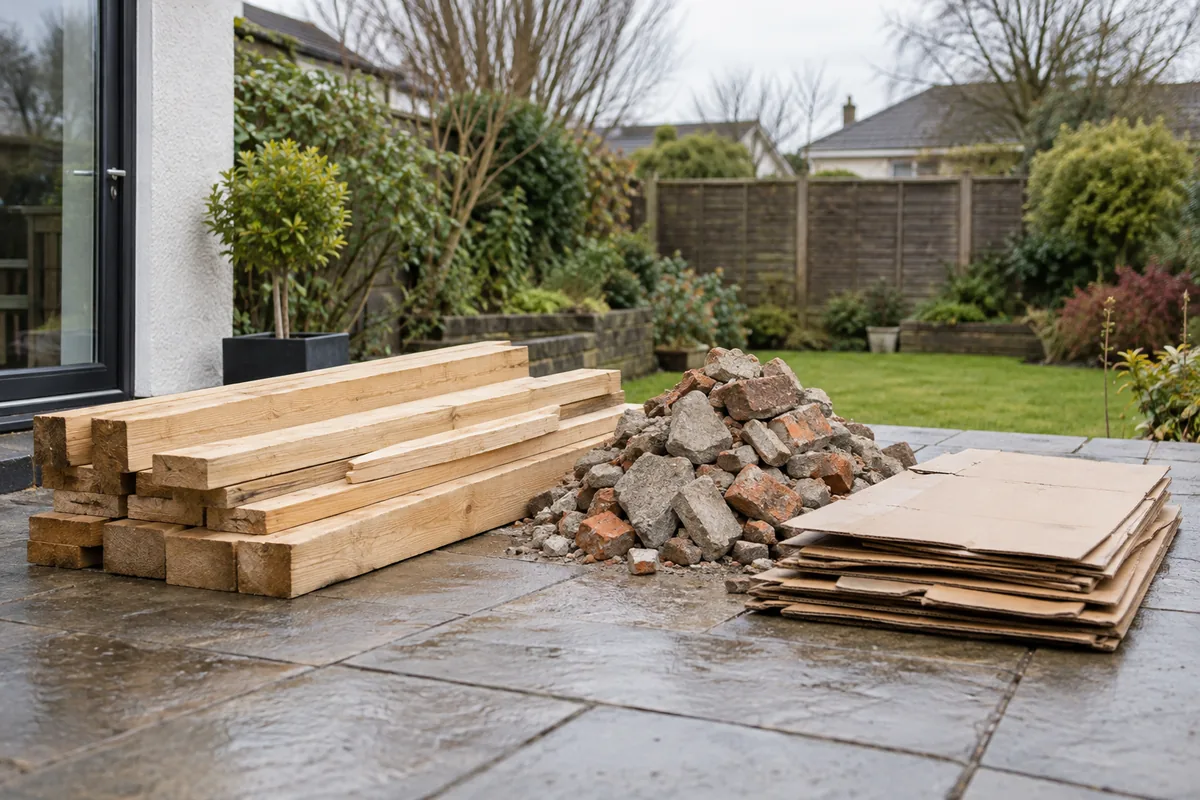
Treat bag counts as a rough guide
Black-bag figures help you compare sizes, but they are not a promise about how much every skip will hold. Bags vary, their contents vary and furniture leaves gaps. Long boards and awkward shapes can use much more room than their weight suggests. Do not pack unidentified waste into bags just to make the pile look smaller.
Where safe, dismantling ordinary freestanding wooden furniture may help it fit. Keep nails, sharp edges and heavy pieces in mind, and do not attempt work you cannot carry out safely. Appliances, upholstered furniture, mattresses and plasterboard need separate checks. Read what can go in a skip before mixing these with other rubbish.
Check room for the skip and delivery lorry
The outside measurements of a skip are only part of the access check. The lorry needs a suitable route to reach the spot and room to place and collect the container. Measure the entrance and describe gates, walls, low branches, overhead cables and parked vehicles. Tell us about a sloping drive or soft ground before agreeing a position.
For a flat or a property with shared access, plan the route from the waste to the skip. Keep the entrance and escape routes clear. A skip booking is for the container; it does not include carrying waste downstairs or loading it for you. If you need that help, our guide to skip hire versus rubbish removal in Dundee explains the difference.
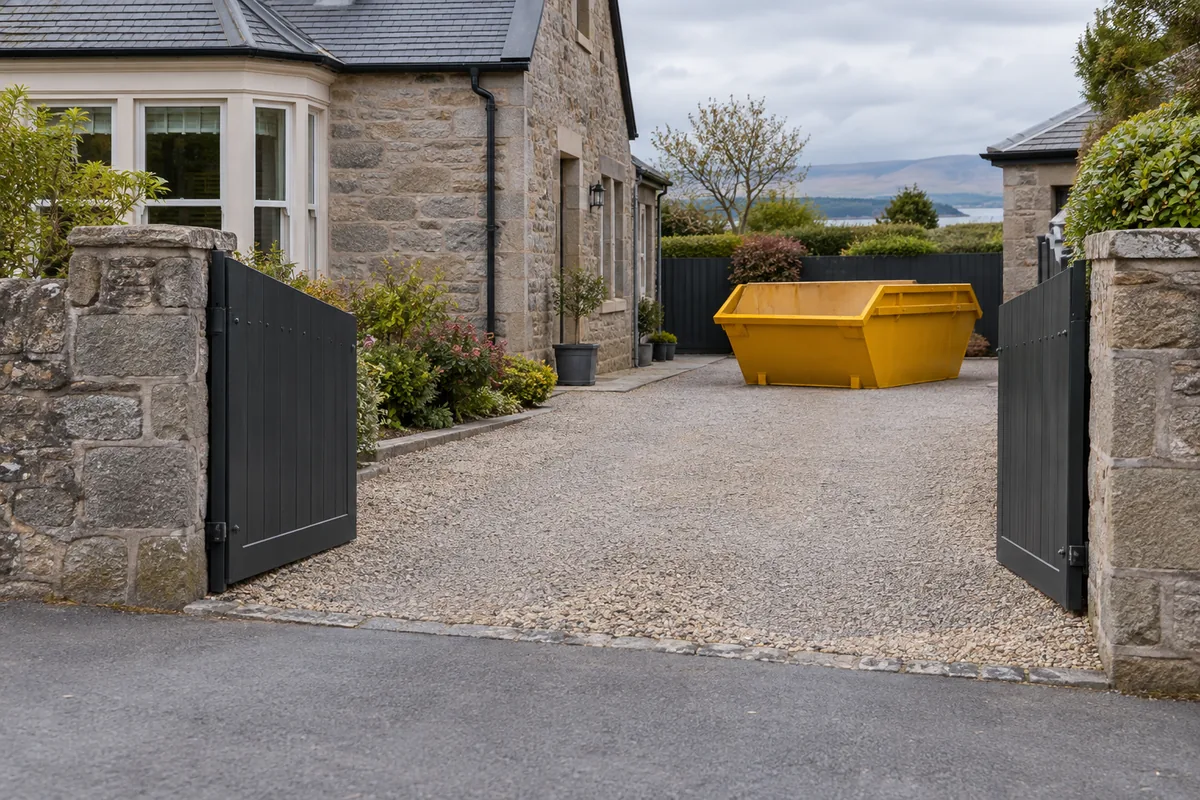
Allow time for road permission
If the skip needs to stand on the public road, permission must be in place before delivery. A pavement or verge can also be part of the public road. Do not assume that the space outside your home is yours to use, or that an empty parking bay gives permission to leave a skip there.
Dundee City Council's published application asks for a location sketch and the dates required. Its guidance asks for applications to arrive at least five working days before the proposed start. Check the current arrangements when booking, including parking restrictions and any additional charges. Our Dundee skip-permit guide links to the council information and explains the different authorities for nearby towns.
Agree the quote and collection arrangements
Give the full delivery postcode, waste list, likely size and preferred dates when you call. Check the hire period, collection arrangements and what the quote includes. Ask how extra hire, a permit or a change to the load would be charged. A useful quote describes the same job you intend to carry out.
Load within the agreed rules and keep everything below the rim. Do not leave extra rubbish beside the skip or add boards to raise its sides. When it is ready, call with the booking reference and delivery address. Keep the lorry route clear until collection is complete, and contact the team before the hire period or road permission runs out.
For skip hire in Dundee, call 01382 250390 with your postcode and a short description of the job. We can talk through the size, waste, access and arrangements you need before you book.